Fellow Stories
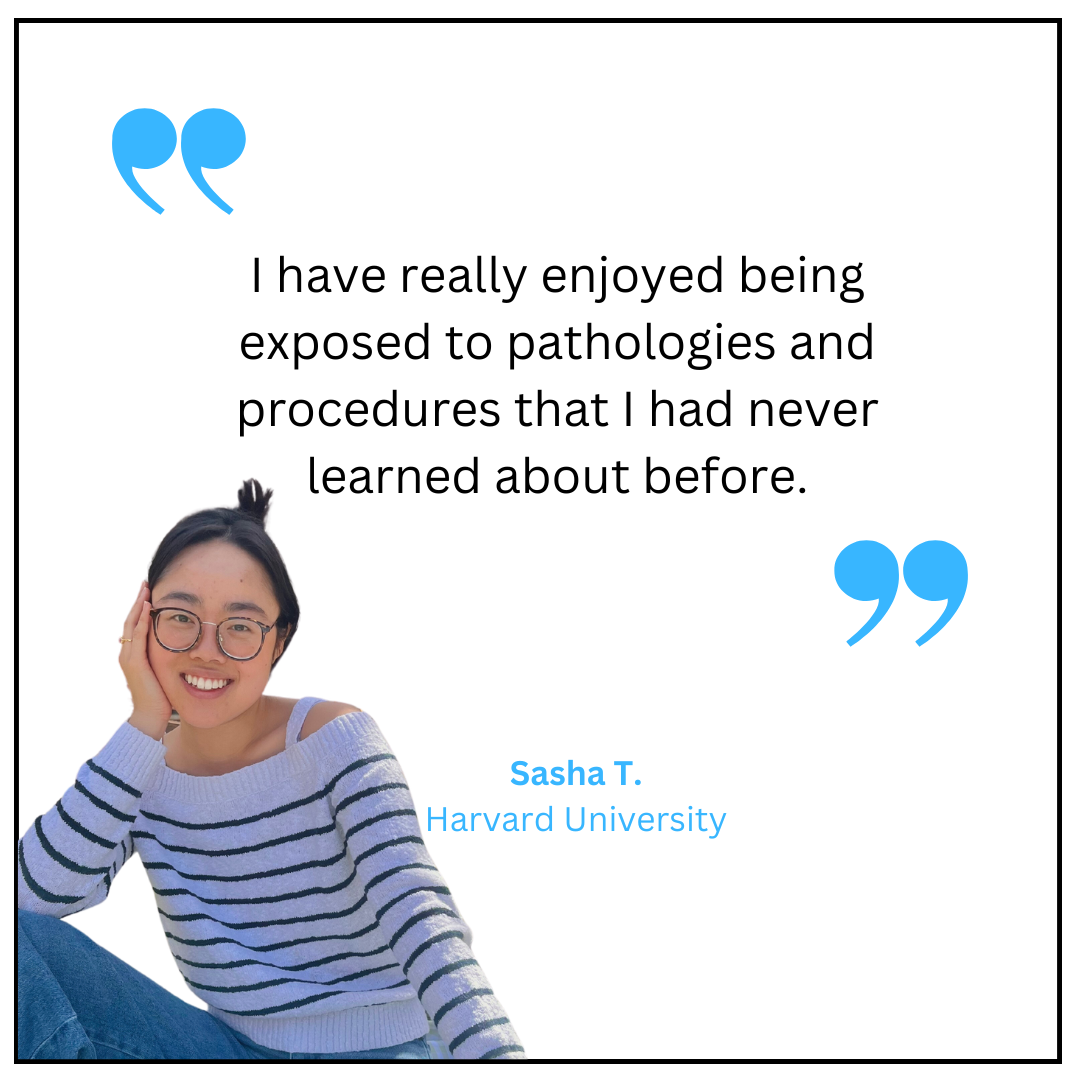
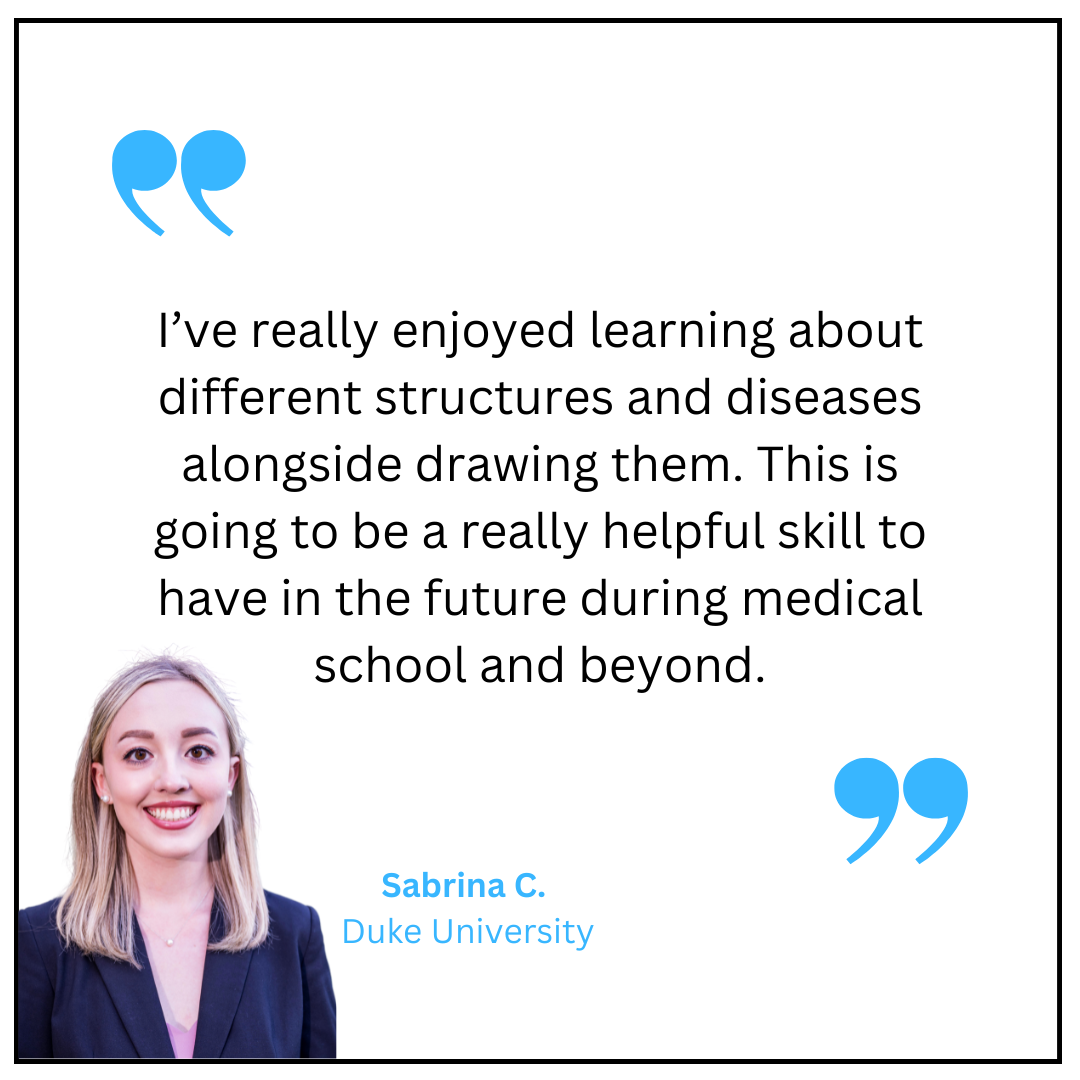
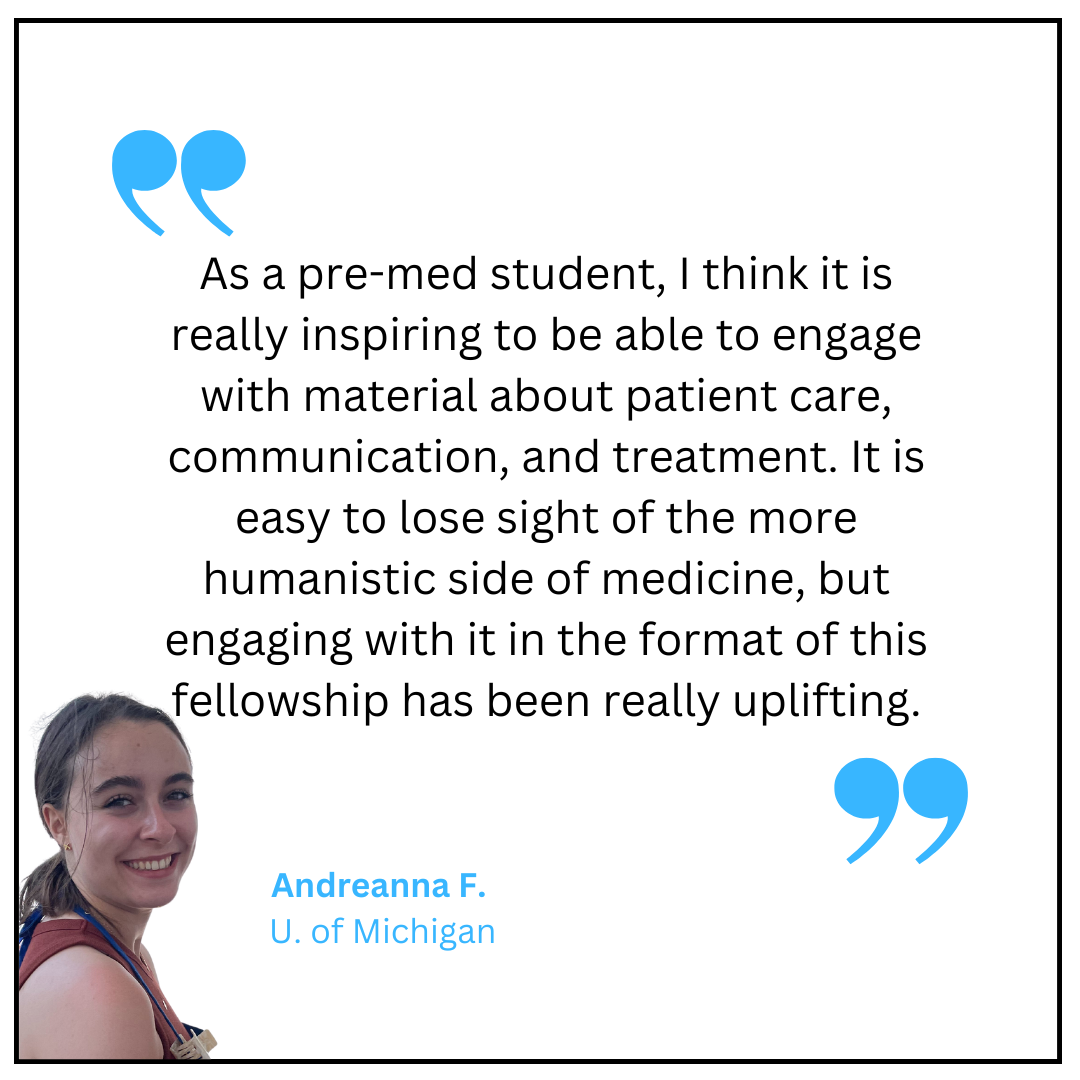
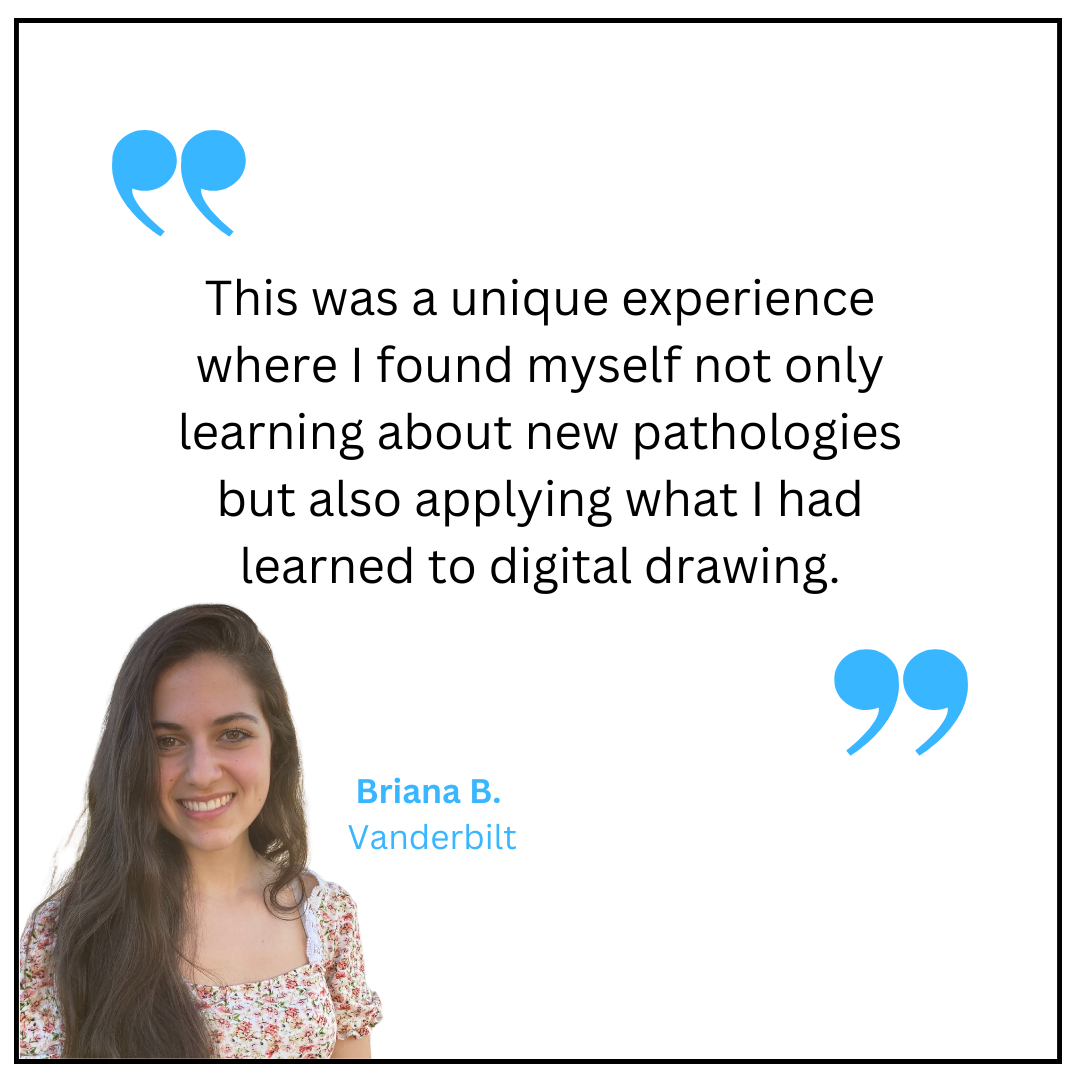
Hear it from the Fellows.
The Fellowship
What you get.
Everything included in the 12-week Pre-Med Summer Fellowship.
10 Case-Based Learning Modules
Guided drawing and communication training across 8 areas of medicine.
Live Virtual Workshops with Doctors
Real-time group training sessions led by practicing physicians, focused on health literacy.
One-on-One Feedback Sessions
Personalized feedback on your drawings and communication skills from our team.
Library of Drawing Templates
A full reference library of medical illustrations and templates to practice with and keep.
Health Literacy Certificate
An official certificate upon completion — something tangible to add to your application.
Pre-Med Community
Access to a network of like-minded pre-med Fellows from across the country.
Personal Statement Guidance
Support and frameworks to help you articulate your experience in med school applications.
Fully Asynchronous & Remote
Only 2–3 hours per week. Work at your own pace alongside everything else in your life.
Low health literacy
costs lives.
Drawing helps fix that.
Draw Medicine was founded by a medical student who discovered that a simple sketch could do what a thousand words couldn't — help a patient truly understand their own health. We've since trained hundreds of future clinicians to use drawing as a bridge between complex medicine and everyday understanding. This isn't a nice-to-have. It's a clinical skill.