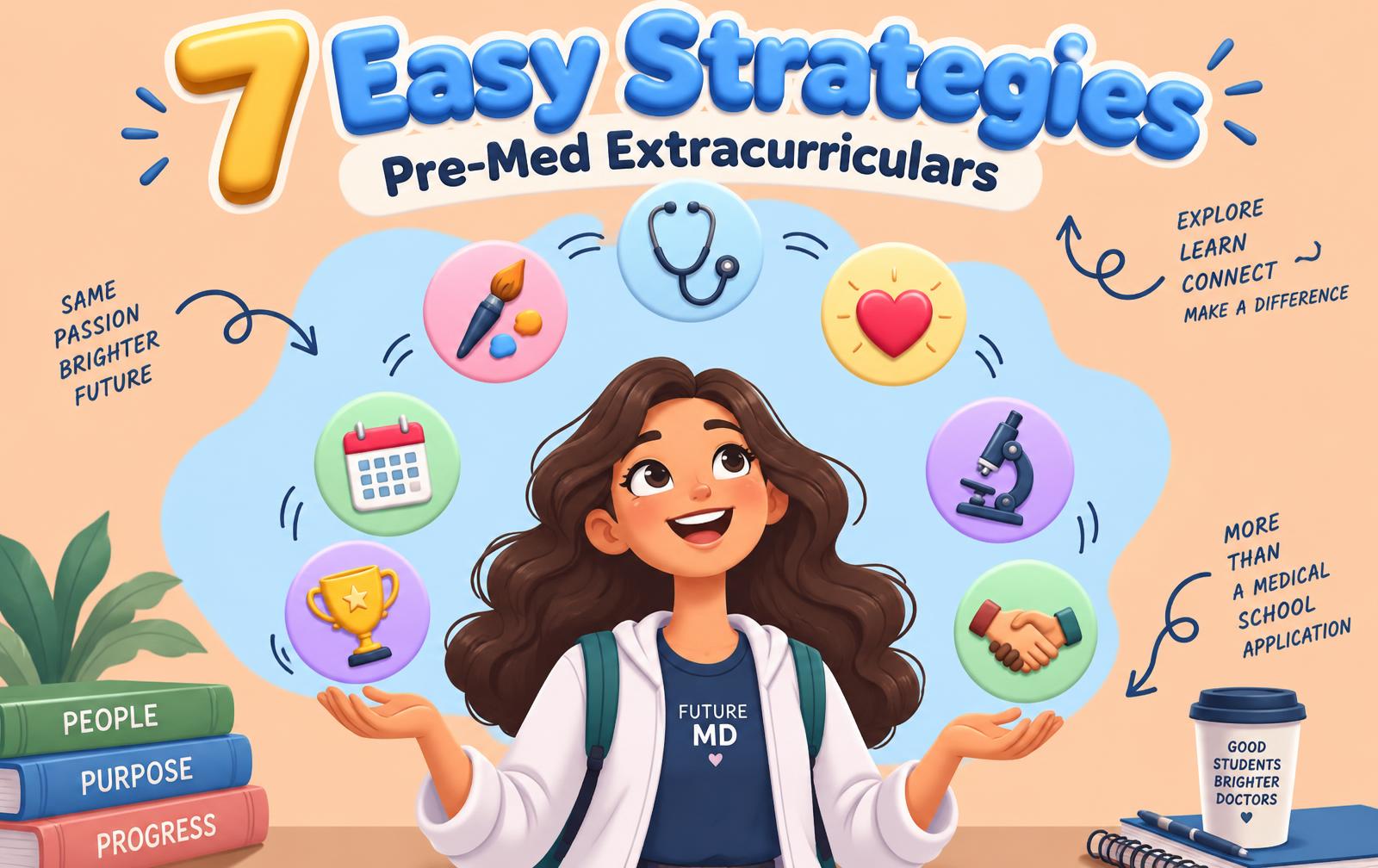
Extracurricular activities are a crucial part of building a strong application for medical school. These activities not only enhance your resume but also provide valuable experiences and skills that can set you apart from other applicants. These activities are where medical schools get to know you beyond your GPA and test scores. Here are some strategies and examples to help you make the most of your extracurricular activities:
1. Choose Activities That Align with Your Interests and are Relevant to Medicine
It is really powerful to have multiple activities that align with your passions and tell a story. These activities will round out your application and will allow medical schools to see who you are outside of your MCAT score and GPA. For me, art was a big passion, so I leaned into internships and research opportunities where I could use my artistic abilities.
2. Quality Over Quantity
Prioritize activities that you participated in long-term and had a significant impact. It is always valuable to stick with a few amazing opportunities.
3. Seek Leadership Opportunities
Leadership is essential in medicine. Find activities you are passionate about and make them your own. Think outside of the box. Like most things, you will probably start as a member of a club or volunteer but stick with it and you will move up — show up consistently, take ownership, and look for problems you can solve.
4. Reflect and Document Your Experiences
Take notes and journal about your experiences! It is a long journey and hard to remember everything. It is important to document your emotions as well. Keep a simple log of what you did, when, who you worked with, and how it felt. The emotional details are the hardest to recall later, and they’re exactly what makes your application essays come alive.
5. Network and Build Relationships
You never know who you will form a valuable relationship with. My letter of recommendation for residency came from a doctor I randomly emailed for research during my first year of medical school (and I didn’t even do research with). We stayed in touch and when I had an idea to start drawing for patients, he was my biggest fan and supported me all the way. Spend the time Investing in relationships with mentors and peers and don’t be shy about going to events, panels, and conferences and meeting new people who you can learn from.
6. Balance Academic and Extracurricular Commitments
Becoming a doctor is a marathon not a sprint. Don't put your social life on pause — you'll need a support system to get through the journey. Take time for yourself. There will always be more to study, but you have to find a way to balance your time.
7. Explore Diverse Opportunities
Though focusing on healthcare-related activities is important, also engage in diverse experiences such as arts, sports, or cultural organizations. This can help you develop a well-rounded skillset and demonstrate versatility. Participate in activities that intersect with other fields such as public health, science communication, or bioethics. This can provide unique perspectives and broaden your understanding of medicine.
By implementing these strategies, you can make the most of your extracurricular activities, build a strong medical school application, and develop valuable skills and experiences that will serve you well in your future medical career.