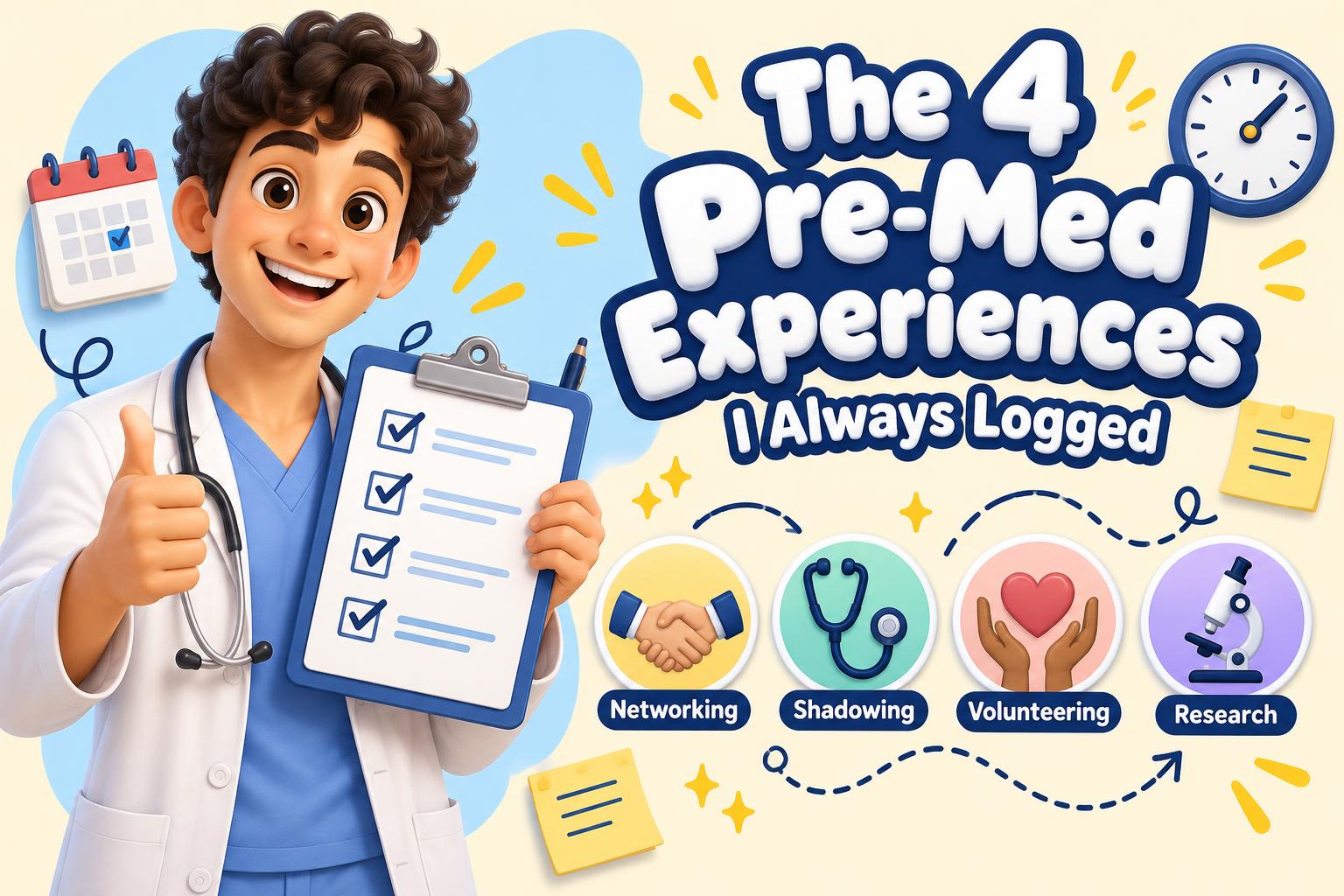
As pre-meds, we’re all juggling a hundred things at once, from classes to clubs, shadowing to research. But in the midst of the chaos, keeping track of your experiences can get lost in the shuffle. Yet, logging each experience is a game-changer when it comes to med school apps, and trust me, future-you will thank present-you.
Here’s the scoop on why logging your networking, shadowing, volunteer, and research experiences is key to your success, with some pro tips on making the process smooth and stress-free.
1. Networking: Building Your Medical Mafia 🩺
If there’s one thing you learn fast in pre-med, it’s that who you know does matter. Networking with doctors, med students, and advisors gives you insider info on med school, career paths, and even some personal pep talks when you're drowning in orgo (we’ve all been there).
Why log it? Keeping track of who you meet helps you maintain connections, follow up for advice or mentorship, and get those golden letters of recommendation. For some reason, this doesn’t get emphasized enough in the pre-med journey. I always thought it would be merit-based — my GPA, test scores, skills and abilities would all speak for themselves. But the reality is, medicine is like every other profession, and knowing the right people and maintaining relationships with them helps.
Pro tip: After each interaction, I always logged what we talked about and any takeaways. I always tried to go to events and meet as many people as possible. But it’s not just enough to meet contacts — you have to follow up with them so they remember who you are.
2. Shadowing: See It, Log It, Own It 👀
Shadowing gives you an unfiltered look at what it’s like to be a doctor, and it’s a must for your med school app. It’s more than just staring over a doc’s shoulder — this is where you gain insight into the day-to-day life of a physician and their specific medical specialty.
Why log it? This is a no-brainer. Admissions committees love to see that you’ve spent time in real clinical environments, and keeping track of each shadowing experience helps you reflect on what you learned. Plus, when the time comes to write your personal statement, you’ll have real experiences to reference.
Pro tip: I always logged the date, hours, and doctor’s name so that it was much easier for me to remember details of the experience whenever I had to discuss these opportunities. I also made note of what I observed, any cool cases, and how it confirmed (or challenged) my decision to pursue medicine. Yes, shadowing is to boost the resume — but it also serves a practical function to inform you if you actually like medicine and if you’ll enjoy a specific area of medicine. Don’t forget that!
3. Volunteering: Giving Back and Stacking Points 🤲
Volunteering is a core part of your pre-med journey, and it’s more than just a checkbox on your application. It shows that you care about your community, which is exactly the kind of doctor med schools are looking for.
Why log it? Keeping track of volunteer hours is essential, especially since you’ll need to report this on your AMCAS application. Plus, you’ll want to be able to easily recall those impactful moments that taught you valuable lessons about service and empathy.
Pro tip: Similar to your shadowing experiences, in addition to tracking the organization, dates, and hours, go a little deeper — what skills did you develop? How did the experience shape your perspective on healthcare? It’ll help later when you’re crafting those application essays!
4. Research: Flex Your Brain Muscles 🧠
Whether you love the lab or not, research experience is a big plus for your med school app. It shows you’re curious, detail-oriented, and willing to dig into complex problems.
Why log it? Research can be a long process with tons of little details, and if you’re not keeping track, it’s easy to forget the specifics. Logging your projects helps you stay on top of your contributions, and it’ll be easier to present these experiences clearly on your application (and in interviews).
Pro tip: Include the project title, your role, and any papers or presentations. But also, highlight what you learned — did you develop new lab skills, or did it spark a new interest in a particular field of medicine? Make it personal! Try to have a small portfolio of 3-5 projects that you feel proud of. Sometimes having significant contributions on fewer research projects is more meaningful than having superficial contributions on lots of projects.
Final Thoughts
Logging your experiences isn’t just about making your future AMCAS application easier (though it definitely will). It’s also about reflection, growth, and making the most out of every opportunity you have as a pre-med. Most of these experiences are required for med school applications, so they can feel like a drag — but if you try to go into every experience with 1-2 things you want to get out of it, the experiences will feel a lot more meaningful and guided. Start logging now, and you’ll thank yourself when the time comes to impress those med school committees!
Happy logging! ✍️