Hi there — I’m so glad you’re here!
I’m Dr. Rebecca Kellner, Founder of Draw Medicine and ophthalmology resident.
I’m also an artist. Growing up, I was always painting, and received advanced training for many years and even became a professional artist.
Despite my love of the arts, I pursued becoming a doctor and applied to medical school.
However, as someone with advanced art training, I always utilized my art skills and used drawing when studying and doing research. Throughout my healthcare journey — even starting from my years in undergrad as a pre-med — I found that drawing things out has helped me understand and remember complex medical material and information.
While in medical school, I found that my art background really informed my didactics in medical school. I also found it valuable in teaching my patients, my co-students, and myself. I used it for studying, research, and communicating with patients.
When I transitioned from the classroom to the clinic, I realized that the problem of low health literacy was a big issue, and frequently prevented many patients from receiving the proper patient care they deserved. Again and again, I saw patients feel overwhelmed, confused, or even scared by the medical jargon and diagrams they heard and saw.
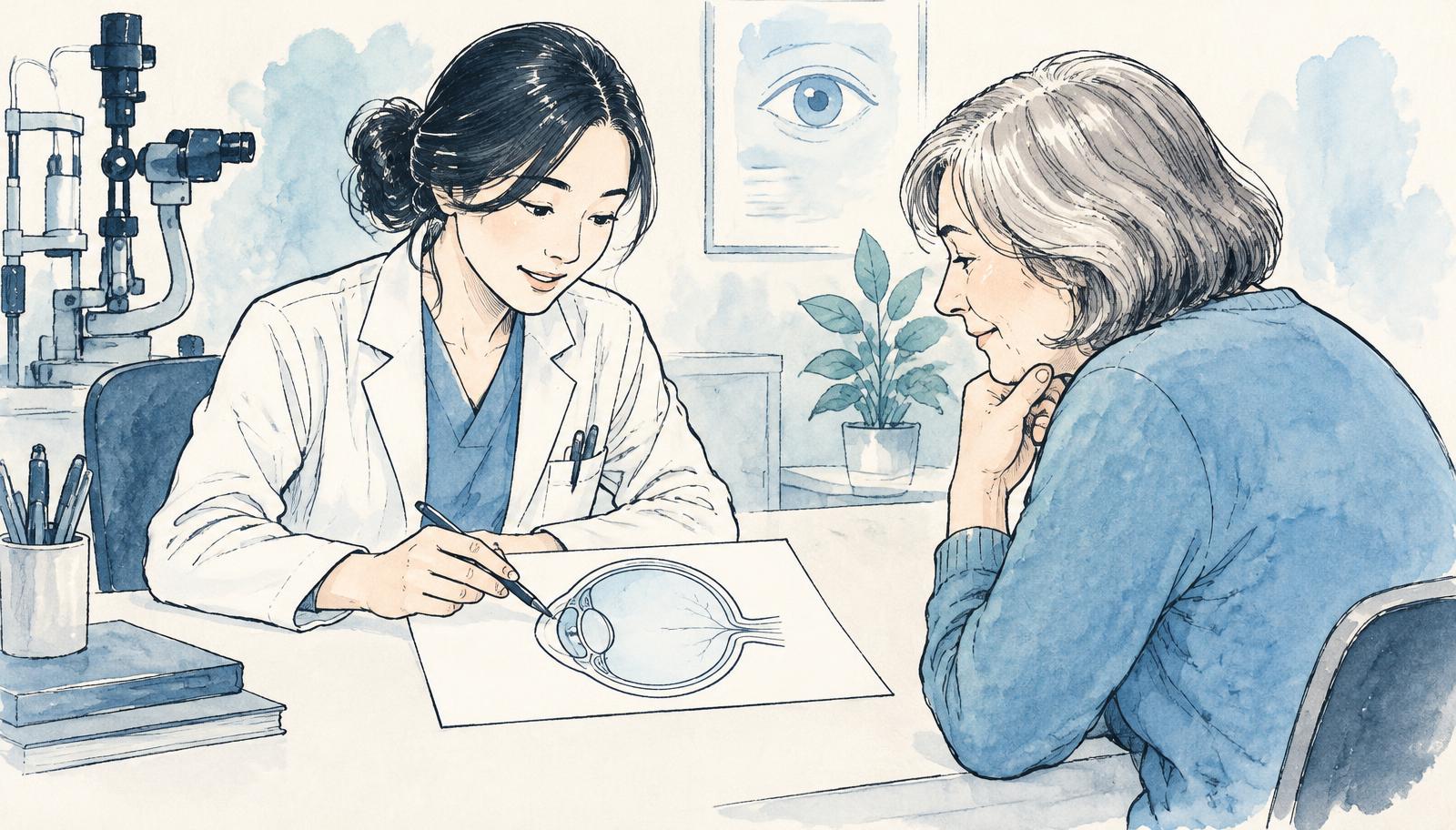
I saw doctors struggle to convey medical information — searching for an alternative form of communication. Often, I saw healthcare providers turn to drawing. Even with basic or awkward scribbles, this often helped with patient communication. But what if these doctors actually knew how to draw and these pen and paper scribbles could be a little bit more detailed?
I believe that every patient has a right to understand their condition, and art and visual communication is a great way to explain complicated medical concepts and improve patient health literacy.
And so my mission became to improve health literacy through drawing and clear communication. I find that when I draw for my patients, it really breaks down those barriers of education, of language, and of culture.
Ultimately, a patient has to be able to take care of themselves, and once concepts are properly communicated to patients, they can better take care of themselves.
What started as a personal learning tool soon became something more — a way to help patients understand their own health in simple, clear terms.
And so I created Draw Medicine to give more clinicians, and future clinicians, the ability to more properly communicate and explain medical concepts, conditions, and procedures to patients. We teach you how to use drawing as a bridge to make medicine accessible and to empower patients to engage with their care.
This is my way of helping more patients beyond those that I directly interact with.
I frequently get this question: “This sounds amazing — shouldn’t I wait until I’m a doctor, or even in medical school, for this to be more relevant?”
The truth is — if you’ve decided that you want to become a clinician, no matter what stage you’re at, it’s already relevant. You don’t need to wait until you’re a medical student or a doctor to use it.
The earlier you learn these skills, the more you can use them and the more valuable they become, particularly as a pre-med. Research papers, studying, shadowing opportunities — these are all places where you use these skills.
The reality is that good communication becomes a habit, and habits are hard to break. If you wait, there’s a very good chance you won’t have the time to invest to learn these skills — trust me, I've been there. Develop those skills and instill them at the beginning of your journey.